
Cape Ann Folklore: Dogtown

Dogtown has been famously depicted in multiple works and carries with it a dark whimsical and magickal past full of folklore. A place that many people still visit today, regularly, to discover hidden cellars, boulders inscribed with words such as; COURAGE, FAITH, HARD WORK & KINDNESS.

Thomasine “Tammy” Younger is an ancestral cousin of mine on my Great Grandmother’s side (my mother’s father’s mother), maiden name: Gray, to which her mother’s mother was a Younger. I have always felt a kinship to Tammy Younger and believe her “witchy ways” were passed down through our family lineage. Beyond the broad brushstroke, very little is known about Tammy Younger, the Queen of the Witches (1753-1829)/ Fox Hill present Cherry Street Gloucester, MA.
“ Of these witches, the two most infamous convicted were Thomazine “Tammy” Younger and Judith Rhines. These women were known for their peculiar lifestyles, and were soon labeled and rejected by the town of Gloucester. However, these women were said to embrace these labels for economic gain, as they used this fear to exploit and beg for money and food.
Younger, likely the most well-known name and feared women in town at that time, told fortunes, made rum, and entertained supposed pirates and criminals. She often “cursed” cattle and wood wagons, and fishermen at the wharfs in exchange for a fee, or food.” [Denman, 2019]
https://thegillnetter.com/staff_name/danielle-denman/
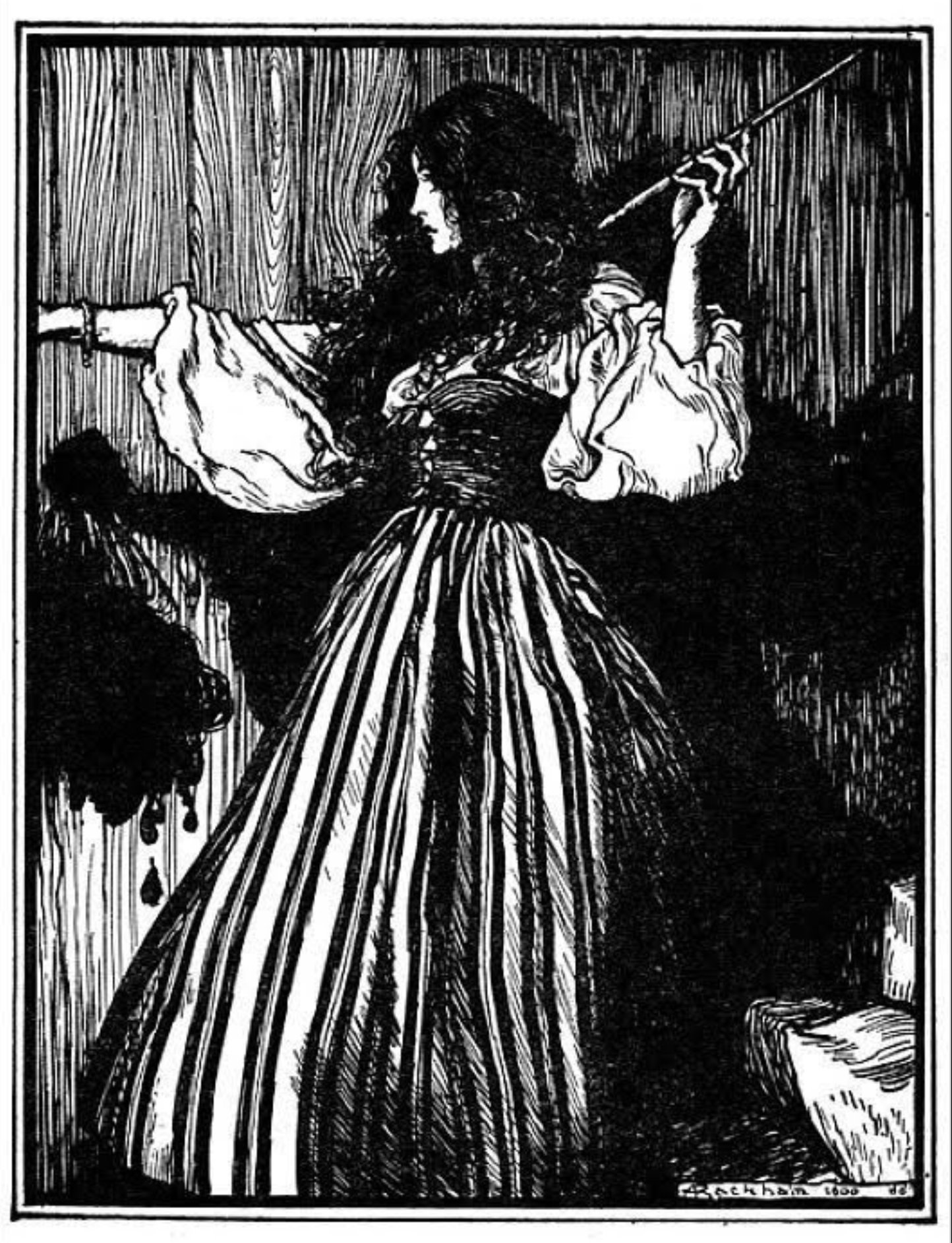
The Witch & the Crow (A Factitious telling of local folk lore)
By Samantha James
The skies were filled with iridescent hues of crimson as the mighty sun yawned for its first break of day. The townsfolkgathered outside the church as the local inland farmers, clam diggers, and fishermen gathered at the crest of our fine town of Beauport. Accompanying the warning of this morning's red sky there was a feeling in the air that was almost bitter in its taste. It had been 13 days since the fishing schooner, The Great Lorry, set sail and its approaching arrival was anticipated. The Great Lorry's Captain, James Everett Younger would have a plentiful season come the end of this October and his wife, Thomasine was growing plentiful in size with their first child.
The year was 1713 and this winter would be fiercely cold and this last run would mark the end of the season for Captain Younger. His wife, Thomasine Younger, better known as Tammy, was what the townsfolk called a medicine woman.Many folks saw Tammy as ungodly, for she dabbled in herbal incantations, read devil-like books, and some said – that she even danced in the moon light. The telling’s of her magick healing brews, salves, and balms traveled far beyond the borders of Salem City. Just as the hysteria of 1692 had hit Tammy had her own reputation as “the town witch”.
Tammy began her day by starting a hearty stew in anticipation of her husband’s arrival later this evening. Suddenlyan easterly wind howled up Cherry Hill and as the deeplymournful sigh rang in Tammy’s ears she felt a sharp pain in her chest like a dagger through the heart. The world went quiet for Tammy and the fluttering heartbeats of her baby and her own -- filled her ears. “James.” She said as she took in a deep mournfulbreath. The crash of her potted stew echoed outside of her hilltop cottage for miles. HE’S GONE. She thought to herself.My husband is gone. The wind and sea would not whisper such lies otherwise, she continued.
The Great Lorry had been 51 miles off the shore of Beauport Harbor when its’ mass went down. All 12 crew members perished including, Captain James Everett Younger, when a rogue wave plundered the mighty oak schooner againstthe rough jagged rocks. From that day forth, Thomasine Younger was the sole proprietor of Cherry Hill, the one and only way for travelers and traders to get to Sandy Bay and Annisquam Village. As seasons changed and the years passed Tammy’s only son, James Everett Jr., had bared a family of his own and settled in the small new settlement of Manchester-by-the-Sea while Tammy stayed in Beauport as an independent merchant taxing travelers as they passed through her land.
Her home was crippling and cracking at its foundation, thehedges were overgrown, and the once pristine garden grounds had become a massive bungalow of tangled vines and unshapely brush but it was her property – her beloved homestead. The very property that her and her betrothed, James, had settled into almost 42 years early… “I have built you the finest home, atop a hill, my love. A home that will serve you and our family well, long after we are both gone,” She remembered his voice so clearly, it was as if James were standing right beside her.
Despite the deep loss and tremendous grief that had befallen Tammy in the fall of 1713, she had found peace nestled atop that hill.
Tammy worked day and night to preserve her land, sowing the earth, reaping its magickal treats, and raising her son but now Tammy was feeling far too weathered and sore to tend to the grounds as she had before. On lonely mornings she found solace gazing out her kitchen window to watch the townsfolk below bustling with excitement as fishing and cargo schoonerssettled into port.
A fine memory of happier days filled her mind as she watched the wives embrace their’ husbands in joyful gratitude for their safe return. The sea had been kinder to those below then it had been to her. On this particularly lonely morning the dew was thick and heavy while the sea’s main voyager, The Black Douglas, was settling into port with its imports. The townsfolk gathered and the awaiting soldiers met the voyager as it docked to ready them for the transit inland towards the trading posts of Sandy Bay and Annisquam Village. Tammy knew that she stood to make a hefty income from her toll as she watched the men load their oxen-drawn carts and head up towards Cherry Hill.
As two soldiers approached the gate Tammy shouted, “Stop! There is fee if you wish to pass across my land safely. Otherwise, I cannot guarantee your health and well-being” The men continued forward without hesitation. “Stop, where you stand! For my price to cross this land is one half of your day’s earning, and a pound of your finest spices. If you oblige my tax, I will ensure you safe passage,” she continued. The two menwere dressed with long range muskets, Northern Military fittings, and stood broad and strong in stature as they brazenlyopened the bottom gate. To Tammy’s surprise the young men did not adhere to her request and continued to walk across her landwithout permission, muskets drawn in a sign of defiance. As an empowered, some-what wealthy widow, Mrs. Thomasine Younger had learned how to defend what was rightfully her own.
“I said, STOP!” She exclaimed.
The two men looked puzzled when Tammy revealed herself beyond the overgrown brush, and gave out a chuckle as they realized that it was just an old feeble-minded woman standing there. “We will do no such thing, Ma’am. Now, let us pass,” one soldier boldly asserted.
“I warn you, if you do not do as I have asked -- then by the light of the triple goddess moon your muskets will go empty, your oxen will befall a great misstep, and you will wither to the deep hysterics of these whispering woods. I have spoken my toll. Please oblige.” Tammy spoke these words as she grasped a small silver triquetra charm in the pocket of her apron. The two soldiers scoffed and continued to stomp across her hearty homestead without fear.
Tammy was not the sort of woman to let such disrespect go unpunished. All the townsfolk knew there was a toll to cross the land of Mrs. James Everett Younger and they feared her knowledge of the moon, the sea, and herbs too much to question the aging woman’s humble request. But these two men seemed jovial in their response as if mocking her when they crossed her land without payment.
As the cart vanished from Tammy’s sight she muttered an incantation. The two soldiers had traveled nearly three hours into the woods of Dogtown when the rear axle snapped in two pieces and the oxen fell exhaustedly just as Tammy had warnedhours before. Unable to move any further the two men stood there frustrated and bewildered by its coincidence.
“Maybe we should have paid the old woman,” one said.
“Oh, do not fall victim to her superstitious rantings! We will fix the wheel and give our oxen time to rest. We should be able to set out early in the morning and…” just as the soldier was finishing his thought a large black crow cawed ravenously at the men from high upon a branch of the might oak tree with splintering bark.
“Caw! Caw! Caw!” squawked the crow. “Caw! Caw! CAW!” All night long the crow sat upon that branch and squawked at the men as they fixed the axel and let their oxen gather strength for the new day’s dawn. But the crow did not let them get even a wink of rest until the sun arose from her sleep. The men were sick with exhaustion as they set off by the light of the red dawn. “Caw! Caw! Caw!” All day long the crow followed the men.
“I cannot take the sounds of that crow a second longer, John. I must silence it now.”
The soldier said this as his went to fetch a musket ball fromhis satchel. But, not one musket ball could be found between them so the one soldier tore a small round metal button from his coat, bent it, and stuffed it down the barrel of his musket, filled the chamber with gun powder, and shot the crow right out of the sky. The silencing boom of that musket shot was bliss to both men’s ear. About two and a half miles deeper into the woods the men traveled tired and sore but victorious – when suddenly the oxen caught a spook and jolted their entire stock of goods to the ground, spilling their entire lot and running off – stranding the two men to the unfamiliar woods of Dogtown. That very same day, Tammy had reportedly retreated to town, injured and bruised, where she met with a local medicine man to have a small round metal button removed from her upper thigh.